
MINIMIZE THE EFFECT OF TRAUMA
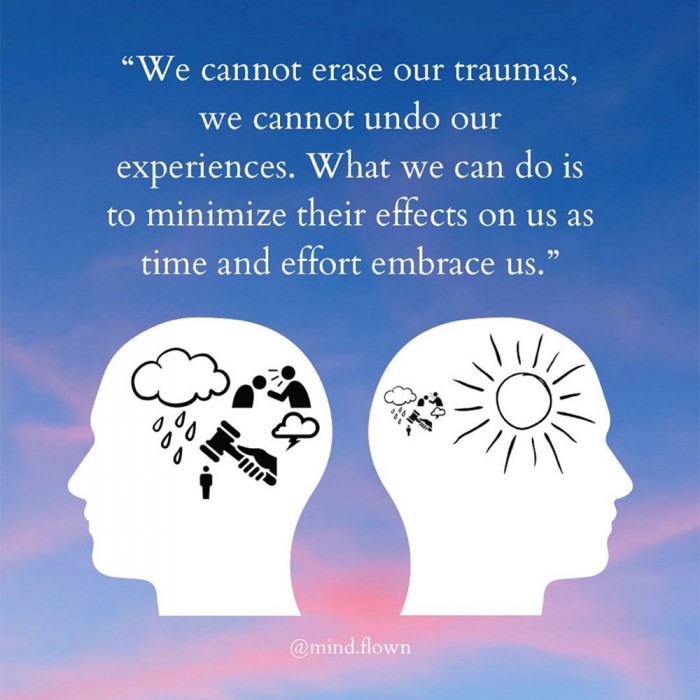
We cannot erase our traumas, we cannot undo our experiences. What we can do is to minimize the effects on us as time and effort embrace us.
In your traumatized brain the thinking system is challenged:
* You can't focus
* You can't think multilaterally
* You have trouble thinking rationally
* You can't decide
The emotion regulation center is challenged:
* Challenging and painful feelings are difficult to deal with
* Impulses are difficult to control
* You find it difficult to balance and manage your emotions
Threat detection center becomes unstable
* Most non-threatening situations are perceived as threats
* You elicit a fear response to many things that used to be normal
What falls on me to minimize the effects of trauma:
* Facing traumas and accepting their existence is the first step. It may affect you deeply, but observing the source of the pain and what it's doing to you is the first step to move forward. Maybe you've lost something, maybe something has changed. Observe the pain that comes with it. Cry, shout, draw if necessary, do whatever you need to express your feelings.
* With the trauma, the mind starts to play games. It is hungry for any logical/irrational belief that will take it out of the context of the event. At this point, it is very important to deal with the facts in order to reduce the effect of trauma. It will help you to question what belief and emotion you do in your behavior.
* Trauma disrupts the functioning of memories because in its normal functioning, a guest came to the mind and changes the places of things. Trauma is an unwanted guest who changes the whole system of the house. In the post-traumatic brain, the connection between memories may be felt to be disconnected, the plot may break from start to finish, and this makes it difficult to cope with. That's why it's important to organize memories. Organizing the traumatic memory throughout makes it less threatening and easier to manage.