
A PINCH OF MINDFULNESS
Mindfulness consists of a variety of present-time mindfulness exercises that can be understood through practice rather than theory. it doesn't really keep up with the way the modern world learns. It prepares us for anxiety- and stress-controlled pathways.
The good thing is that the mindfulness work is with yourself. You become the teacher of your mind during the practice, and it is possible to start giving yourself this lesson through your daily life routines.
When the mind does routine and monotonous activities in daily life, it switches to a mode we call "autopilot". For example, has there ever been a point where you were driving and wondering how you got your home?
That's where autopilot comes in. When we disconnect from ourselves and the events, people, and things around us, we are not in control of our minds.
At this point, while our body is doing the activities that it already did before many times, that it has memorized mentally (driving, brushing teeth, washing the dishes...), our mind begins to wander in the thought cycle about the past or future.
You may be thinking about “Why this is so important, what a good, time is passing!
But while the mind on autopilot and travels to past and future, we are filled with anxiety and stress and eventually get tired. As the mind loves to construct and is very fast at it, when someone asks what we think, we can't even answer.
With mindfulness, we become the driver of our minds and turn off the automatic mode.
How can I start mindfulness in everyday life?
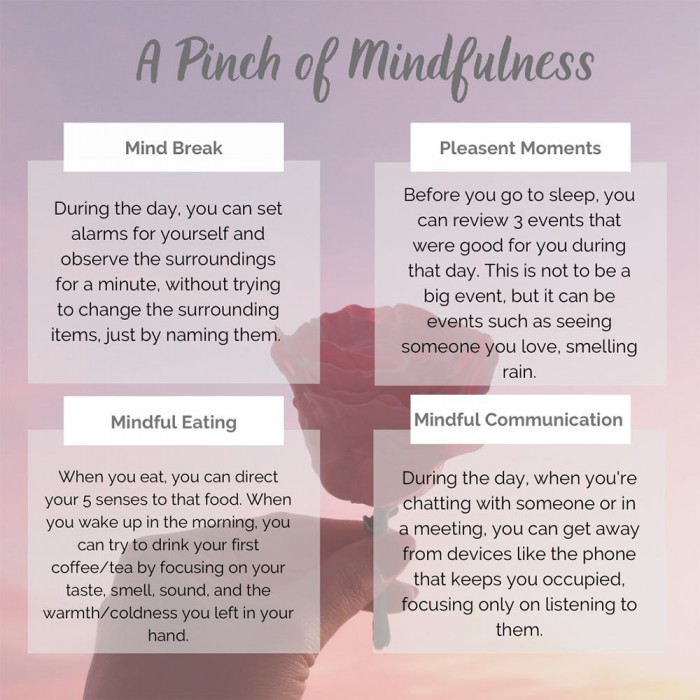
1) Mindful eating
2) Mindful communication
3) Mind Break
4) Writing down pleasant moments, thinking about them
These may sound like simple and unnecessary exercises, but you should think of mindfulness as a muscle. It is best to start working this muscle with small, simple and routine movements.